Real-time Voice Conversational SDK
A low-latency SDK for building real-time voice-first conversational experiences with streaming ASR, intent detection, and TTS.
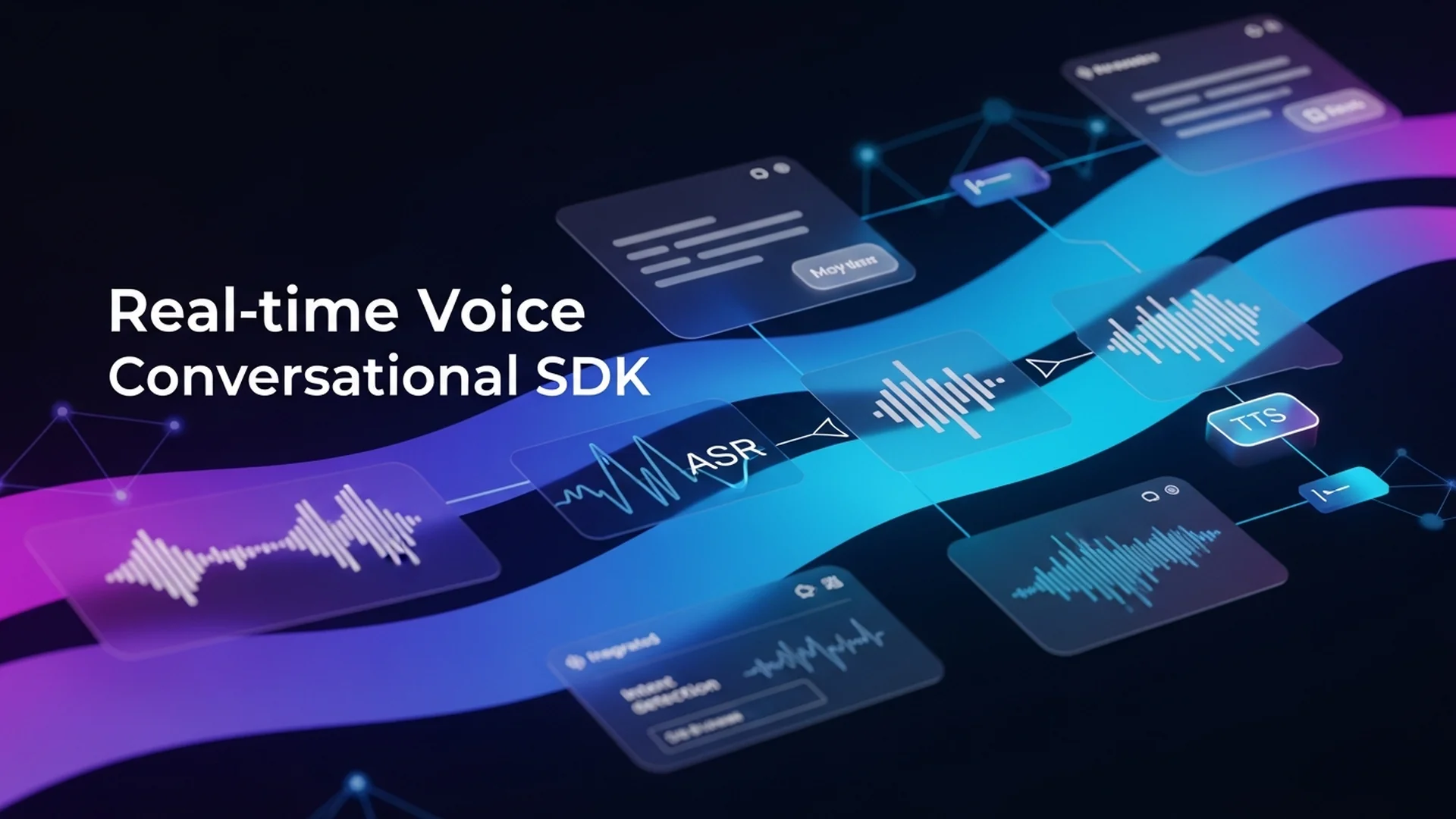
Voice interfaces are resurging as a natural way to interact with apps—especially for hands-free and accessibility-first experiences. The Real-time Voice Conversational SDK provides developers with components for streaming automatic speech recognition (ASR), low-latency intent classification, and natural-sounding text-to-speech (TTS) to build real-time voice assistants, in-app voice messaging, and live transcription features. The SDK focuses on predictable latency, adaptive codecs, and fallback strategies to handle variable network conditions.
SEO keywords: real-time voice SDK, streaming ASR, low-latency TTS, conversational voice SDK, voice assistant SDK.
Core features and benefits:
- Streaming ASR: partial and final transcripts with speaker diarization for multi-speaker contexts.
- Intent pipeline: compact on-device intent models for immediate routing and cloud-based models for complex workflows.
- Low-latency TTS: neural TTS with caching and chunked synthesis for immediate playback.
- Network resilience: adaptive bitrate streaming and jitter buffering to reduce audio glitches on poor networks.
Feature summary table:
| Feature | Benefit | Implementation |
|---|---|---|
| Streaming ASR | Immediate transcripts | WebRTC/RTP or gRPC streaming |
| On-device intent | Fast responses | Tiny classifier models, rule fallbacks |
| Chunked TTS | Seamless replies | Neural TTS with prebuffering |
| Transcription & logs | Accessibility & analytics | GDPR-aware retention policies |
Implementation steps
- Integrate client SDK (iOS/Android/Flutter) to capture audio and stream to the speech stack using WebRTC or secure gRPC.
- Provide local intent detection for common commands and fall back to cloud models for complex dialogues.
- Implement TTS pipeline with neural voices and caching for common responses.
- Add analytics and optional recording with secure, opt-in storage for compliance.
- Provide sample integrations for contact centers, in-app assistants, and live captioning.
Challenges and mitigations
- Latency vs. accuracy: streaming ASR must balance partial results with final transcript quality. We tuned endpoints to provide useful partials and updated final transcripts with low jitter.
- Speaker separation: diarization is challenging in noisy environments; combining voice activity detection and per-speaker embeddings improved separation.
- Network variability: WebRTC with adaptive codecs and forward error correction improved resiliency.
- Privacy & compliance: provide local-only processing modes and strong consent flows for recordings.
Why this project matters now
With voice adoption increasing across mobile and embedded devices, a robust real-time voice SDK accelerates product development for voice-first experiences and accessibility features. From an SEO perspective, content about building streaming ASR, low-latency voice assistants, and voice UX best practices attracts engineers and product leaders exploring voice modalities.